... Life is not so dear and peace not so sweet as to be purchased by the chains of slavery.
There are still we few out there who beleive it is better to die on our feet than live on our knees, that war may be an ugly thing, but it is not the ugliest thing. To paraphrase John Stuart Mill, we know that those cold and dispasionate souls who beleive nothing is worth fighting for will only be made and kept free through the efforts of better men than themselves.
And so, I give you, President Ronald Reagan:
Reagan - We Must Fight speech
Always remember than people sleep peaceably in their beds at night only because rough men stand ready to do violence on their behalf.
This is my position - My opinions. This blog is a little bit of everything that I do and know that makes me what I am: A student and a soldier. A gentleman and a scholar. A writer, an investor, a businessman, and an adventurer.
Here I Stand
Wednesday, October 27, 2010
Monday, October 25, 2010
General Motors IPO
Recently in the financial news, the IPO (Initial Public Offering) from General Motors has made quite the headline. Some argue that since GM took TARP money from the Federal Government, that this IPO is the American people buying up the debt that the company still owes to Washington – the debt that was already paid for by the American tax payer. Yes, I certainly see their point in this, but GM is already in the process of paying back the TARP funds, and this IPO is going to serve as capital for expanded growth. I recently spoke to a long time GM manager, and he is, understandably, very excited about the possibilities offered by this IPO. General Motors is one of the leading American green / hybrid car manufacturers, and the capital acquired from the IPO will go towards hiring new employees – everyone from engineers and managers to line workers, and funding new and expanding projects, like the Chevy Volt, a highly anticipated entirely electric car. The company is saving money with their new hires by putting them on contracts as opposed to full employee status – meaning good and competitive pay, for a specified project or period of time, but without the benefits and pensions (or union status) that the automotive industry had become known, and condemned, for over the past few decades. The biggest question in my mind, and that has been asked on CNBC and other financial news shows, is whether or not the $25+ price tag on the IPO shares is really worth it. This is a significant increase over past GM prices – even before the bankruptcy, and there is some question as to the actual value of this new stock offering. This will require a bit more research before I invest any of my own (currently non-existent) capital, but my initial feeling is that GM is a company that has adapted and overcome hardship and changes in both the economy and popular culture for the better part of a century. They are well managed and have a good foothold in the future of the auto industry – hybrid and electric cars – far more so than many of the other American auto manufacturers out there, and this IPO will facilitate a high rate of growth. Combine this with the emerging middle class in China, which is pining for American goods, to include cars, and the emerging potential in India (again with a preference for American imports) I think that though $25 a share is expensive for what it will yield this year or next year, this is the ground level of a growing project, which may have the endurance for a long and profitable run.
Sunday, October 17, 2010
Friday, October 15, 2010
The Dow is back at 11K... Is this good news?
These last couple of weeks the Dow Jones Industrial Average, and the market in general, have improved quite a bit, as much as 7-8% in some areas, but is all this bullish activity really a good sign of an improving economy? Some pundits out there – even some respected ones – say “no” and who am I to argue? Well, I'm me, and I say... “Maybe”
The main argument against the idea that an improving market is bringing the US economy out of recession has to do with the rapid increase in the deflation of the US Dollar in the past few weeks. Just yesterday CNBC correspondent Erin Burnett said that the S&P 500 and the value of the US Dollar – two data streams that usually have a positive correlation are running against each other. The S&P has been up 8% in the past few weeks, while in the same time frame, the value of the US Dollar has dropped 7%. some argue that the weakened dollar is one of the driving forces in US stocks being traded – that foreign investors can get a good deal hedging their investments due to the exchange rate. This is, of course, true, but I doubt that the one caused (or causes) the other. Yes, savvy investors always look for favorable exchange rates in foreign markets to get the most out of their investments, but when they start to invest foreign capital into the American market, it still benefits our production, and our overall economic situation, until the exchange rate evens back out.
A devalued US Dollar will not last long, and the increase in capital to our market that we are experiencing at the moment, whether caused by the lower value of the dollar or not, will keep showing returns far after the dollar has leveled off and begun to increase in value.
Another safety net in place is the idea that some of our major economical competitors like China and India may be overvalued – like what happened with Japan just a few months ago. The massive deflation of the Yen caused a huge drop in the Japanese market, and then an influx of foreign investment. Japan is, of course, still recovering from this drop, but it is on the road to digging itself out of that hole. Many experts believe that China is soon going to be forced to do a similar devaluation to the Yuan, and the Indian Rupee might be in the same situation.
The current situation with the value of the US dollar may not seem favorable for emerging market investment, and if the future holds a deflation for China and India, then investors would be wise to stay away from there as well. All the same, UBS investments is very favorable to emerging markets, and relies heavily on these investments to make their returns. South Korea and Malaysia have been given as examples of undervalued and producing nations that could see significant economic growth in the future. I personally like Latin American markets for their agriculture and bio-fuel / green energy potential, and Brazil is at the top of my list.
Overall, the dramatic increase in the market these last few weeks is restrained somewhat by the devaluation of the dollar, but not to the point where the two cancel out. If anything I see both activities as facilitators for US Economic growth. I plan to keep investing, hedging my American companies and funds with the emerging markets that I have been a fan of for a while. 11,000 in the Dow is milestone, but in my opinion, by no means a plateau.
Wednesday, October 13, 2010
Deployment Investments
My old battalion is about to deploy again – this time to Afghanistan, and one of the things that I wanted to touch on today was finances and investments while overseas. I know a lot of the people who read this are military, or at least former military, and not many of those of us in uniform get much training on what to do with our money. Many of the men I served with used their combat pay to buy a new Mustang, which they subsequently wrapped around a tree, or squandered it on extravagances like video game systems or the latest gadget (these days that would likely be an iPad, a few years ago it was an xbox 360) yeah, sure splurging on something every now and then for putting up with everything you do overseas is fine, but I got a lot more satisfaction by being that much richer after deployment.
One of the simplest and best options while overseas, is also one of the most overlooked. The Savings Deposit Program, or SDP is an excellent way to rack up a bit of interest on your already tax free pay. The program yields a guaranteed 10% APR, and although it maxes out at $10,000 it doesn't take very long to get to that point while deployed. You have to be in country for 30 days before you can sign up for it (your time in Kuwait counts, so you can really sign up before you get fully into sector) and one of the best things about this program is that you still receive interest on your money for 90 days after DEROS (date of estimated return from over seas) so on a 12 month deployment you'll receive 14 months of quarterly interest payments.
When I was in Iraq I alloted every cent of my paycheck to go to the SDP, and any incidentals that I needed – which wasn't much - I put on a credit card (USAA will drop your credit card interest rates to 2% for the duration of any deployment, so you're turning a profit by delaying payment) in about 3 months, after the interest payments, I was more or less maxed out at $10K and stopped the allotments (you can make cash or check deposits too, but you have to go to the finance office on whatever FOB you're close to, and sometimes thats more trouble than its worth). I even withdrew the interest when it went over the max so I wasn't losing any opportunity cost. All in all, I made more than $1000 in interest from a 15 month deployment, and the craziest thing was that I was the only soldier in my company that enrolled in the program. This is a great opportunity while you are overseas, and if you don't take advantage of it, you're missing out.
I spoke with an accountant friend of mine about taxes overseas, and taxable income specifically for this blog. It's no secret that your pay while deployed is tax free, but what is taxable are capital gains. Any investments that you make and earn money off of is taxable (the profit from it, not what you invested)
while you are overseas and have Internet access – not a given by any means if you're in an Infantry outfit or another combat role, feel free to play the market – buy low and sell high. USAA and most other banks offer investment programs and investment advice (for a fee, of course). If a stock or mutual fund is doing well, of course you don't want to sell it, but if you see a plateau or you think it has toped out for the moment, sell it and then reinvest low. Any profit you make you'll owe taxes on, but thats the beauty of investing while deployed – if your entire taxable income is just a few thousand dollars, you likely won't pay a dime come tax time. Even if you don't want to start investing on your own or day trading, being deployed is a great time to get involved with an investment program, which are fairly easy to get started and a definite force multiplier for your cash.
One government program that I do have an issue with is the Thrift Savings Plan, of TSP. I contributed to my TSP for about 8 months while I was in the Army before I decided it just wasn't worth it. This package is sold as a 401K type deal for soldiers, but it really isn't. There are no matching investments (which is odd, considering they match investments for DOD civilians, just not service members) and the investment options are just way to conservative for my tastes. I am young, as are most people in the military, and an aggressive investment plan is really the way to go in the long run – you'll make way more money than playing it safe, and anything that doesn't do well because it is aggressive, is canceled out through your diversification (which is why I like mutual funds – instant diversity). Yes, its true, anything invested in the TSP is tax free till you retire, and that has some advantages, but when you are deployed, and everything is tax free, that takes away the only perk. The TSP is all well and good, but I would have made a lot more if I had simply kept investing instead of contributing to my TSP.
Once again guys, stay safe over there. I'm truly sorry I can't go with you this time (to the point that I'm seriously considering commissioning to the National Guard... I have unfinished business). Keep your heads down, and don't blow this chance to walk away with a bit more cash.
Tuesday, October 12, 2010
Siglo Cigar Lounge and Acid Kuba Kuba
Spent the evening last night at Siglo Cigar Lounge here in Newport Beach. So far it is the only true cigar lounge that I have found since coming to California, and that is something that I miss about being in Florida. A friend of mine used to say that a cigar is a 45 minute vacation. You hit the pause button on life and just enjoy. A good smoke is more than just good tobacco. It involves everything that goes on around you. It is the camaraderie and conversation that comes through the smoky veil of a good cigar. It is made up of the entire experience of burning one in good company, and the pleasant memory of every good cigar you've smoked before. Siglo cigar lounge provides just that. They are open late, and turn into something of a hangout in the evenings – as a good lounge should! They have a friendly, knowledgeable staff, and a big screen TV playing sports, movies or whatever the consensus happens to be. This does tend to stem conversation a bit, but there is always a discussion going on in the front of the store. Their selection is limited (they don't carry my Room 101's) but what they do have is excellent, and Gary, the manager, would be happy to give you a reccomendation.
Last night I chose an Acid Kuba Kuba, from Drew Estate. I am a big fan of the Drew Estate line of cigars, and though I don't typically care for flavored smokes, Acids, and their Kuba Kuba specifically don't really fall into this category. This was a light, pleasant smoke, with smooth draw and high volume of rich smoke. I could not specifically identify the flavor though (which, along with the high quality tobacco, sets it apart from the awful Swisher Sweets and Dutch Masters and other gas station smokes that are normally associated with flavorings) it fell somewhere as a mix of sweet coffee and rum, and combined well with the full, round mouth feel of the smoke. Another point of praise for the Kuba Kuba – it was good right down to the last draw, instead of turning harsh or bitter as some cigars tend to do after burning for an hour or more.
Overall this is a good intro cigar, or a good choice when you want something light and pleasant when you don't want the robustness of a full bodied maduro.
Sunday, October 10, 2010
Amputee Graduates Special Forces Sniper Course
Yeah, you read that right...
Amputee Graduates Special Forces Sniper Course
From Army.Mil - The US Army's Homepage
JOHN Wayne has toured Afghanistan and Iraq, hunted grizzly bears in Alaska and earned the Silver Star; and as of July, he is the first one-legged Soldier to graduate the Special Forces Sniper Course.
Staff Sgt. John Wayne Walding of Groesbeck, Texas, that is.
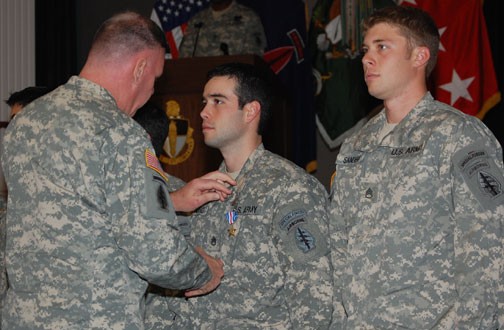
In April 2008, Walding and nine other Special Forces Soldiers from a 3rd Special Forces Group assault team were attacked by the Hezeb Islami al Gulbadin while searching for insurgents in Afghanistan's Shok Valley.
Over the six-and-a-half-hour firefight, more than 150 insurgents were killed. The members of the assault team were each awarded the Silver Star in December 2008 for their courageous actions.
Walding, one of several team members injured, took a bullet through his right leg under his knee.
"I ripped off my boot lace and literally tied my leg to my thigh to keep it from flapping around," he said.
After his injury, Walding knew he wasn't going to give up and leave the Army. He also didn't want to spend the rest of his career behind a desk.
"You don't become a Green Beret because you 'kind of like it,' you become a Green Beret because you love it, and can't imagine being anything else," he said.
While recuperating, Walding worked as an assistant instructor at 3rd SFG's sniper detachment at Fort Bragg, N.C., where he refused to lower his personal standards because of his injury. But in order to become a full-time instructor, he had to complete the Special Forces Sniper Course at the John F. Kennedy Special Warfare Center and School.
During the course, many of Walding's classmates didn't even know about his injury and prosthetic leg. Walding said he enjoyed his fellow Soldiers' reactions after they learned about his missing leg.
"At first, (my classmates) were shocked to realize I was missing a leg," Walding said. "Then, they realized 'Wow, he's doing everything I'm doing!'"
The seven-week Special Forces Sniper Course teaches sniper marksmanship, semiautomatic shooting, ballistics theory and tactical movement. Sgt. 1st Class Christopher Owens, an SFSC instructor in 2nd Battalion, 1st Special Warfare Training Group, emphasized the importance of these skills, and said it takes Soldiers like Walding to push themselves to the limits.
"Snipers have become more dynamic over the past 10 years," Owens said. "Considering current operations overseas, snipers have never been more prevalent, because of the need for distance shooting in rugged terrain."
Walding loves everything about training to be a sniper, particularly the mission and the weapons. He even enjoyed training during the hottest June ever recorded in North Carolina.
"The skill of a Special Forces sniper is unparalleled," Walding said. "This is the most prestigious sniper school in the world. That means something."
"There was never a doubt that Walding would do well in this course," Owens said. "He is extremely motivated, and that never dropped during the course. He never asked for special treatment; he did the same training as everyone else, and scored well in all the exercises."
That never-quit, Soldier-first attitude is what started him back on the path to Special Forces following the battle in Shok Valley.
During his initial recovery at Walter Reed Army Medical Center in Washington, Walding set short-term goals for himself. He was a runner before the incident, averaging 50 miles per week. During recovery, he would get up and run a little more every day, always keeping his focus on that next step.
Walding is using the same process to work his way back to an operational role. As a Soldier, his first step was to finish the sniper course; the next step is acting as an instructor for his fellow Soldiers. He's hoping to work his way back to a place on an operational Special Forces detachment.
"I'm John Wayne, born on the Fourth of July. This is what I was meant to do." Walding said.

Amputee Graduates Special Forces Sniper Course
From Army.Mil - The US Army's Homepage
JOHN Wayne has toured Afghanistan and Iraq, hunted grizzly bears in Alaska and earned the Silver Star; and as of July, he is the first one-legged Soldier to graduate the Special Forces Sniper Course.
Staff Sgt. John Wayne Walding of Groesbeck, Texas, that is.
In April 2008, Walding and nine other Special Forces Soldiers from a 3rd Special Forces Group assault team were attacked by the Hezeb Islami al Gulbadin while searching for insurgents in Afghanistan's Shok Valley.
Over the six-and-a-half-hour firefight, more than 150 insurgents were killed. The members of the assault team were each awarded the Silver Star in December 2008 for their courageous actions.
Walding, one of several team members injured, took a bullet through his right leg under his knee.
"I ripped off my boot lace and literally tied my leg to my thigh to keep it from flapping around," he said.
After his injury, Walding knew he wasn't going to give up and leave the Army. He also didn't want to spend the rest of his career behind a desk.
"You don't become a Green Beret because you 'kind of like it,' you become a Green Beret because you love it, and can't imagine being anything else," he said.
While recuperating, Walding worked as an assistant instructor at 3rd SFG's sniper detachment at Fort Bragg, N.C., where he refused to lower his personal standards because of his injury. But in order to become a full-time instructor, he had to complete the Special Forces Sniper Course at the John F. Kennedy Special Warfare Center and School.
During the course, many of Walding's classmates didn't even know about his injury and prosthetic leg. Walding said he enjoyed his fellow Soldiers' reactions after they learned about his missing leg.
"At first, (my classmates) were shocked to realize I was missing a leg," Walding said. "Then, they realized 'Wow, he's doing everything I'm doing!'"
The seven-week Special Forces Sniper Course teaches sniper marksmanship, semiautomatic shooting, ballistics theory and tactical movement. Sgt. 1st Class Christopher Owens, an SFSC instructor in 2nd Battalion, 1st Special Warfare Training Group, emphasized the importance of these skills, and said it takes Soldiers like Walding to push themselves to the limits.
"Snipers have become more dynamic over the past 10 years," Owens said. "Considering current operations overseas, snipers have never been more prevalent, because of the need for distance shooting in rugged terrain."
Walding loves everything about training to be a sniper, particularly the mission and the weapons. He even enjoyed training during the hottest June ever recorded in North Carolina.
"The skill of a Special Forces sniper is unparalleled," Walding said. "This is the most prestigious sniper school in the world. That means something."
"There was never a doubt that Walding would do well in this course," Owens said. "He is extremely motivated, and that never dropped during the course. He never asked for special treatment; he did the same training as everyone else, and scored well in all the exercises."
That never-quit, Soldier-first attitude is what started him back on the path to Special Forces following the battle in Shok Valley.
During his initial recovery at Walter Reed Army Medical Center in Washington, Walding set short-term goals for himself. He was a runner before the incident, averaging 50 miles per week. During recovery, he would get up and run a little more every day, always keeping his focus on that next step.
Walding is using the same process to work his way back to an operational role. As a Soldier, his first step was to finish the sniper course; the next step is acting as an instructor for his fellow Soldiers. He's hoping to work his way back to a place on an operational Special Forces detachment.
"I'm John Wayne, born on the Fourth of July. This is what I was meant to do." Walding said.

Subscribe to:
Posts (Atom)